


4 questions to ask yourself if you want to move abroad
A day or two of reflection and research can save you months or years of regret.
Knowing why you want to leave is important and can help you shorten the list of countries that will allow you to live in a way that you need, be it a dramatically lower cost of living or a different political system. But, each season of our life draws us towards different ways of living, and moving abroad is often a major signal that you're entering a new season of life.
In 2025, more people picked up stakes and left the US than arrived as immigrants than any time since the Great Depression nearly 100 years ago. Given the assault on immigrants inside the US in 2025, it's hardly a wonder new immigrants stayed away. But the increased exodus of US citizens leaving the USA is a new inflection point of rising discontent with life in the US.
Some new emigrants have researched and planned for years before their move, sometimes working with relocation experts, while others felt the strong NOPE, and went into action quickly. There's no one right timeline for making the move, but if you're at the beginning of this decision making process, scrolling through house listings in another country (while fun) is probably not the best way to achieve what you most want and need.
As you begin to research moving abroad, here are four questions you should start with to focus your research:
1. What is true now?

So many of us are making the move or thinking about it, and each of us has our own motivations, hopes, worries, and differences in how we need to live. People who left the US in recent years often report they made the decision to leave in search of a more affordable cost of living, better healthcare, more political stability, stronger protections for women and LGBTQ people, less anti-Black racism, and less gun violence.
Moving abroad can be really challenging - financially, emotionally, and socially. It can also change our lives in amazing ways. The difference between what we wish was true about our life and what's actually true about our life can be vast. There's often a difference between the money we wish we had available to us vs. what's in our savings account or the story we have of who we must live near vs. the people we interact with every day, week, or month.
So what is true about your daily life RIGHT NOW that you can name? We created a worksheet to help you reflect on what's true about your resources, your daily life, and what worries you about your daily life now that you want to be different wherever you might land next. Naming this now will help you remain clear about what's driving your potential move abroad, focus on your realistic priorities and explore what's possible.
2. What do you actually want in the next season of your life?

Knowing why you want to leave is important and can help you shorten the list of countries that will allow you to live in a way that you need, be it a dramatically lower cost of living or a different political system. But, each season of our life draws us towards different ways of living, and moving abroad is often a major signal that you're entering a new season of life.
Are you in a season of building economic and material stability for yourself and your family? If so, we truly don't recommend trying to move to an isolated hillside in the fairly expensive Swiss Alps unless you get a high-paying job offer and/or free housing.
Are you looking at this move as an opportunity to expand your career or skills? Then the programs, school admissions requirements, or industry opportunities will drive the cities and countries you focus on.
Are you planning your retirement and ready for a life of walking and transit after sitting in your car an hour each way in your 40-years commuting to the city for work? Start your search with that at the center and compost any expectation you'll have a different life in a new country while also having a dedicated parking space for the car you will not need.
Have you been working at a job with a W2 for decades trying to pay off student loan debt or create stability for your family, but what you really want is to run your own small business? Naming that this is what you want for the next season of your life can doors wide open, because it means you can focus on countries like the Netherlands that have visas tailored explicitly for small business owners instead of focusing on companies and countries who want to employ you in your current line of work.
Give yourself the time and space to dream big about you want in the next season of life from beginning before you start looking at visa pathways. You’ll be less likely to spend a lot of time pursuing one country, city, or company at a time, hitting a dead end, and regretting the weeks or months of effort that you can never get back.
3. What countries CAN you actually get a VISA in?
As of this writing, 179 countries allow US passport holders to arrive without a special visa. Where you can legally stay and build a life, however, will depend on your age, income, savings, criminal record, other passports you may hold, and (for many) your ability to secure a job in the country. It will also be influenced by the pathway options of the people you are moving with, including your partner, adult children, friends, or parents. In some countries, your health status may prevent you from ultimately securing a visa to live there. So, before you pack your car and drive to Canada, do your research or hire a consultant to do it for you. See our recommended resources page for a range of services.
4. What are your ACTUAL priorities for how you'll live your life abroad?
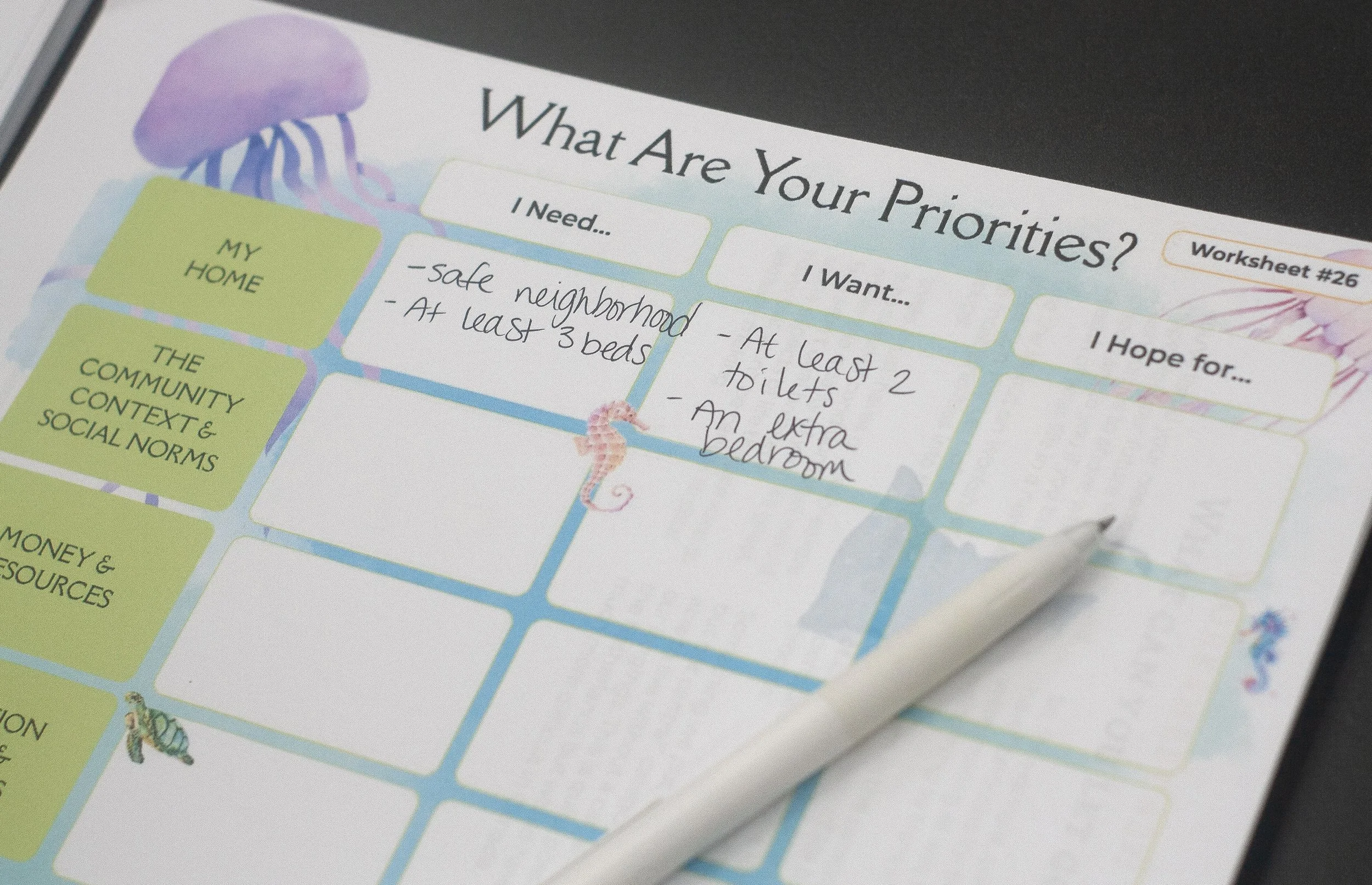
If you've spent most of your move-abroad research time scrolling home listings and end up counting out Copenhagen because a turkey won't fit in the oven, it's likely a sign you're not yet honed in on your priorities.
If you've answered questions 1-3, you're probably well on your way to imagining what could be in the next season of your life and what countries it might take you to. But to determine where you're going to live and how you're going to live there, you need to set some clear priorities.
We recommend you start by listing all the things you think will be important about where you live next. Then, sort it by "I need" "I want" and "Nice to have."
For example, you may NEED to have a place where you can get a certain kind of medical care in order to live. You may WANT a home with enough bedrooms for your kids to each have a bedroom, but most children can share a room if they need to. And it would be nice to have a bakery within a 5 minute walk of your house or to live near an international airport. Sort them out and consider that there may be other ways to meet your needs in the next place you live. For example, many countries have fast and reliable rail transit that goes right to the international airport. So, you could possibly live in a smaller, more affordable city rather than the capital and meet both your NEED for housing costs under €1,800 per month, while meeting the WANT to live within 20 minutes of an international airport.
Your next chapter starts not by scrolling through home listings or social media reels, but with honest answers to these four questions.
The Should I Stay or Should I Go Workbook is a step-by-step guide to help people deciding if they should leave the US. It's created by two queer parents who made their move-abroad decisions whispered in the front seat of the car or texted across the house. Wishing this upon no one else, created and then shared tools that can hold the complex and wide-ranging decisions wrapped up in the question, Should I Stay or Should I Go? It's available as a digital PDF download or paperback workbook.